PRESERVE ~ RESEARCH ~ EDUCATE

The International Osprey Foundation

Dedicated to the preservation of the Osprey
By Barbara Linstrom July 21, 2026
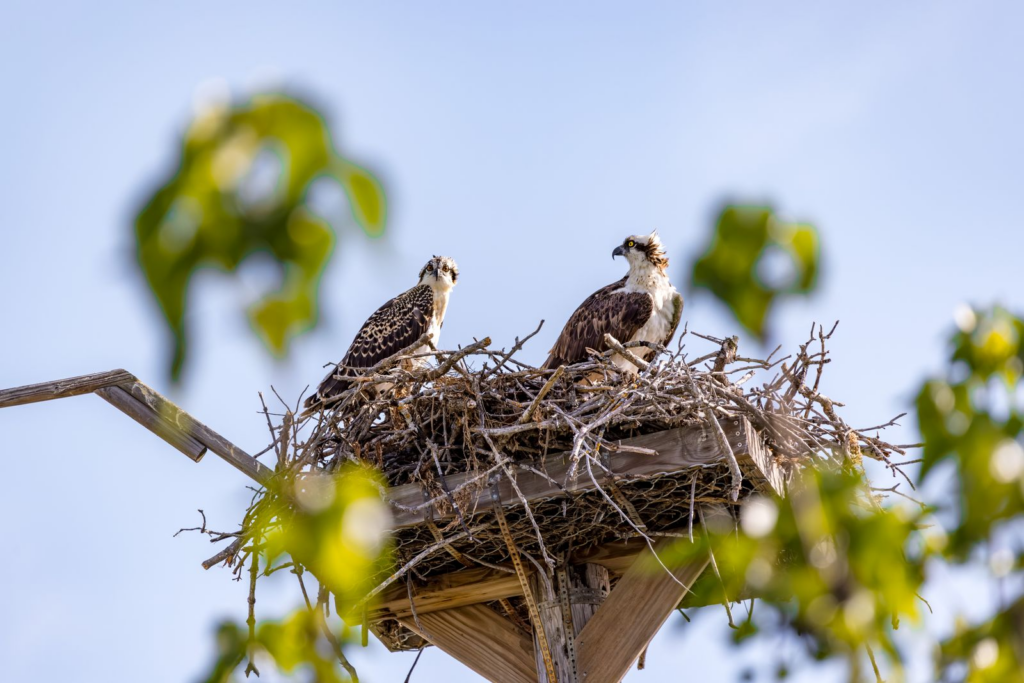
SCCF wrapped up the monitoring of its first-ever osprey nesting season with impressive results: 187 of 221 chicks fledged, an 84.6% success rate, and a productivity rate of 1.24 — well above the 0.8–1.15 range needed to sustain the population. Volunteers monitored 151 active nests across Sanibel, Captiva, Pine Island, and Fort Myers Beach as part of a program that watches over 200 osprey nests throughout the region to track population health and reproductive success, feeding data into the global OspreyWatch database. Because ospreys eat an almost entirely fish-based diet, their populations act as a sentinel for water quality — making this season’s strong numbers a good sign for Southwest Florida’s coastal ecosystems, not just its raptors. In January, The International Osprey Foundation officially transferred its mission to SCCF. Founded in 1981, TIOF spent decades building the region’s osprey program before entrusting it to SCCF. With its mission to protect and care for Southwest Florida’s coastal ecosystems, the osprey monitoring program complements SCCF’s broader conservation science work.  Learn more about our osprey monitoring work>>> Adopt an osprey nest to support our efforts>>>
July 15, 2026
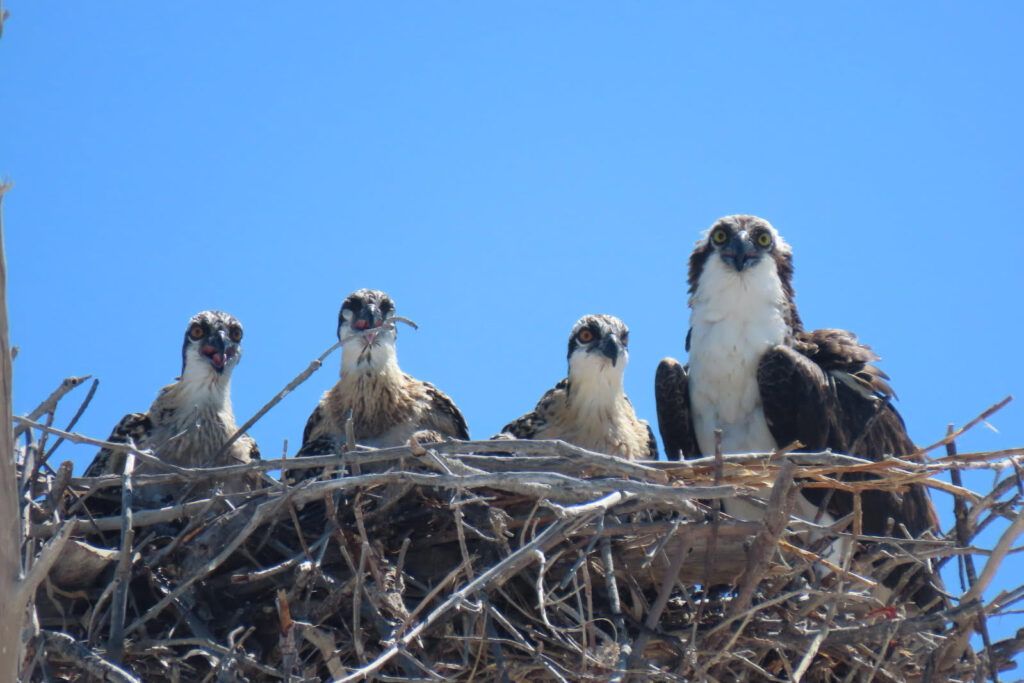
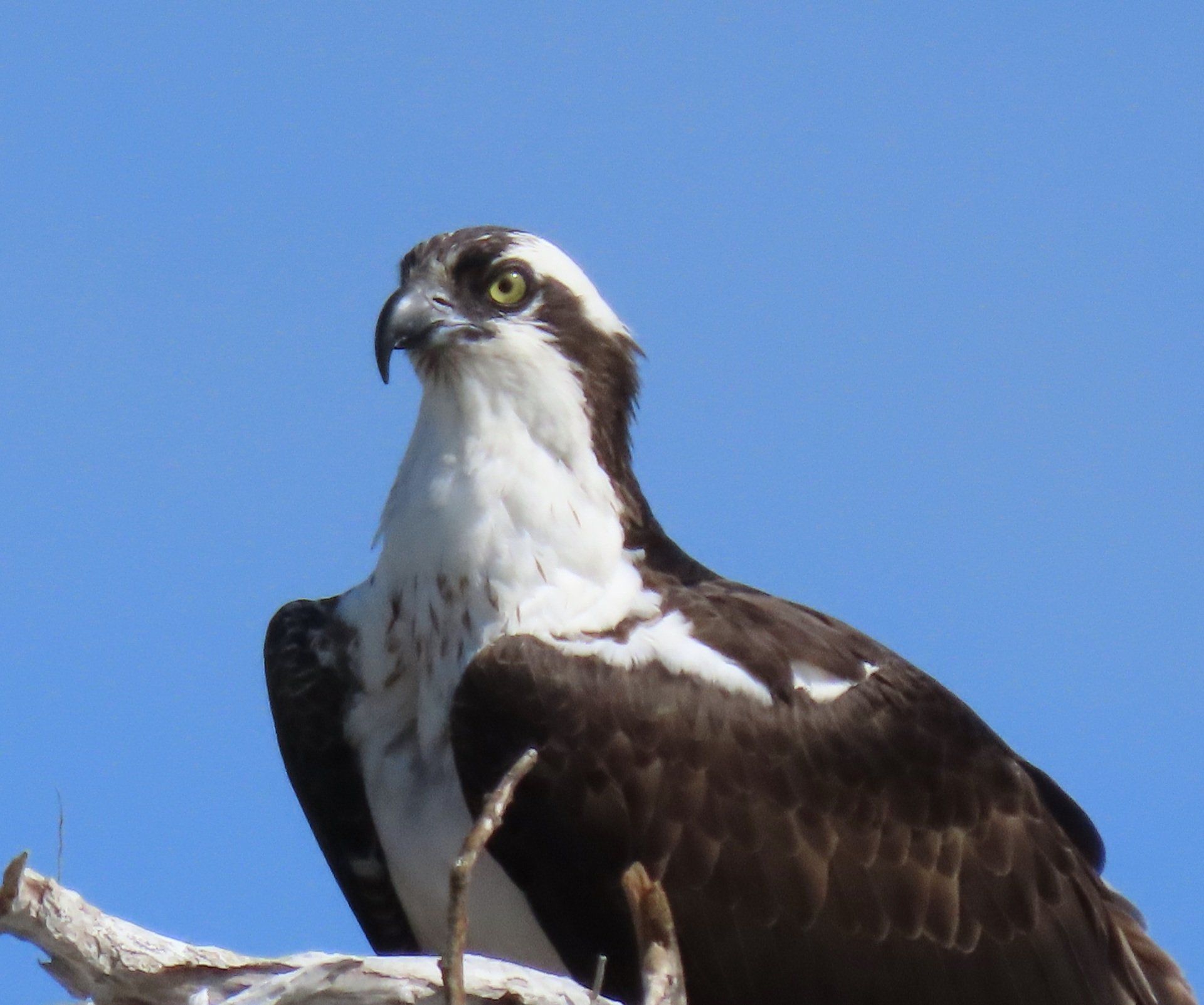
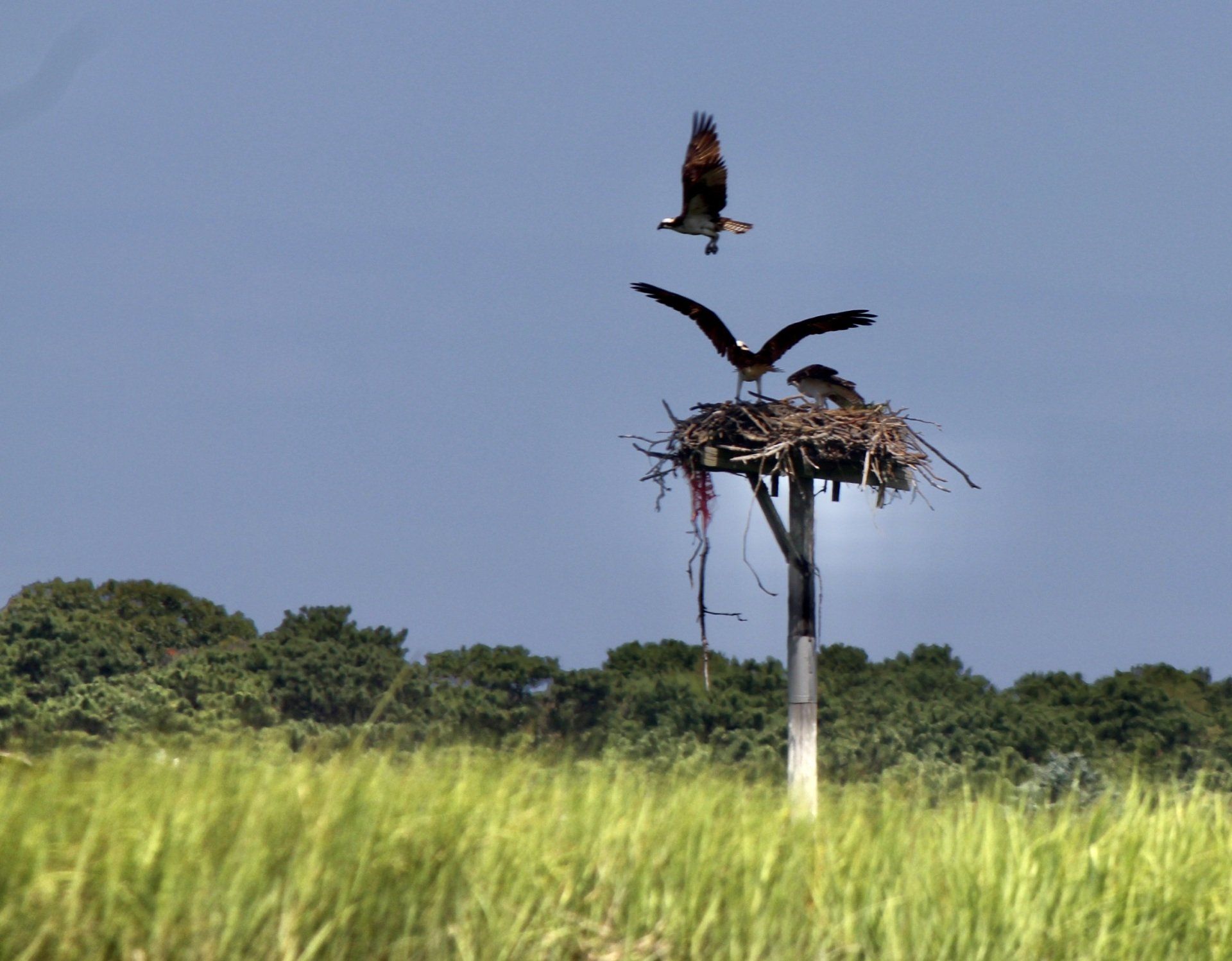
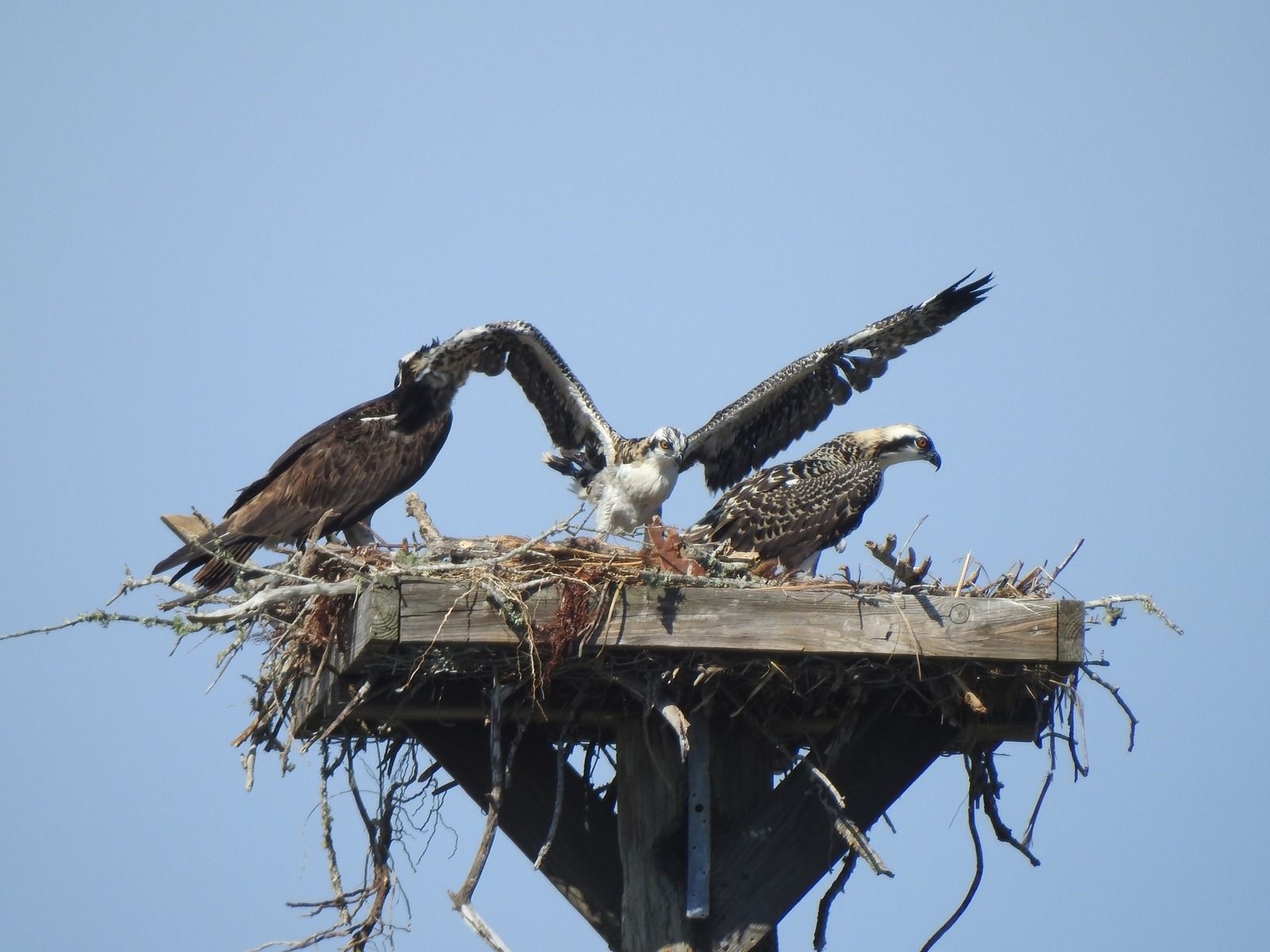
Fledgling on the left, compared to its parent on the right. Young ospreys (Pandion haliaetus) began to take flight last month, with at least 43 chicks fledged after months of efforts from osprey parents. Ospreys lay an average of 3 eggs that hatch after 5-6 weeks of incubation. Young chicks can be hard to see from below, so it may take a few weeks for chicks to be confirmed. SCCF volunteer monitors can rely on various clues to determine that a nest has hatched, such as observing the female sitting higher and displaying behaviors like feeding and shading.
July 15, 2026
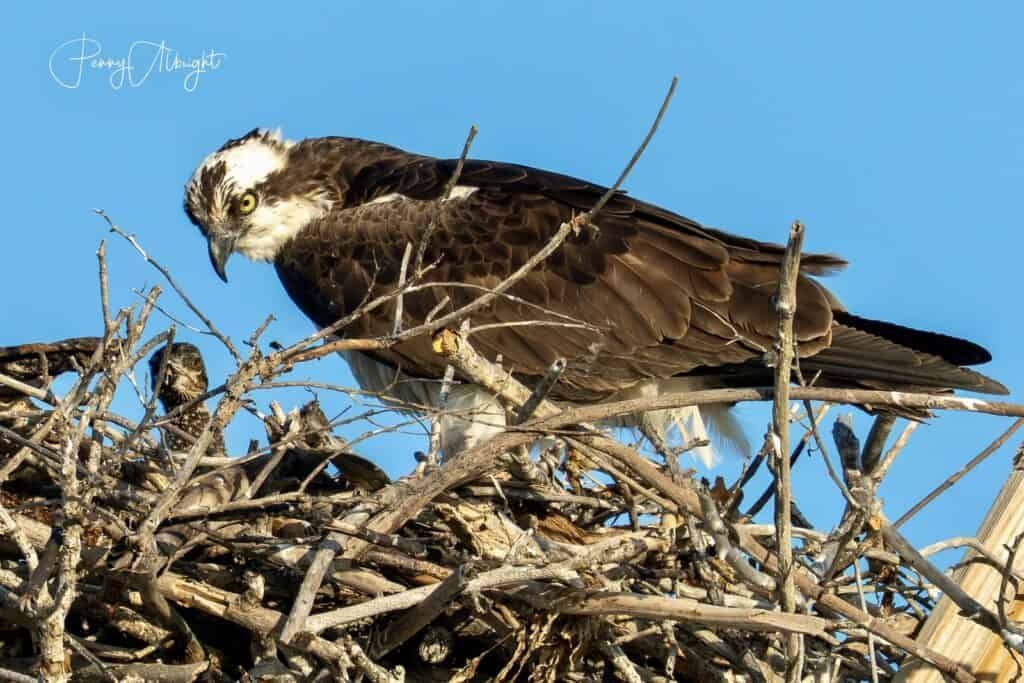
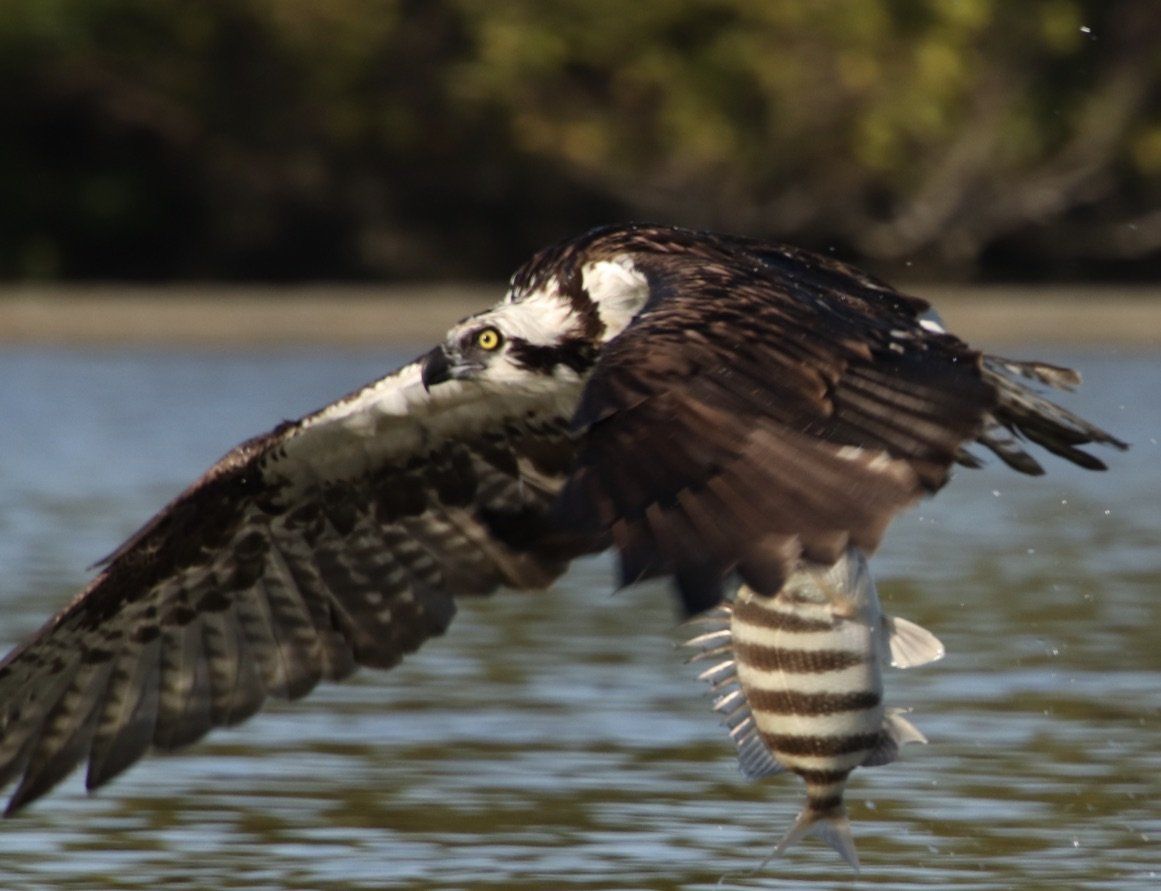
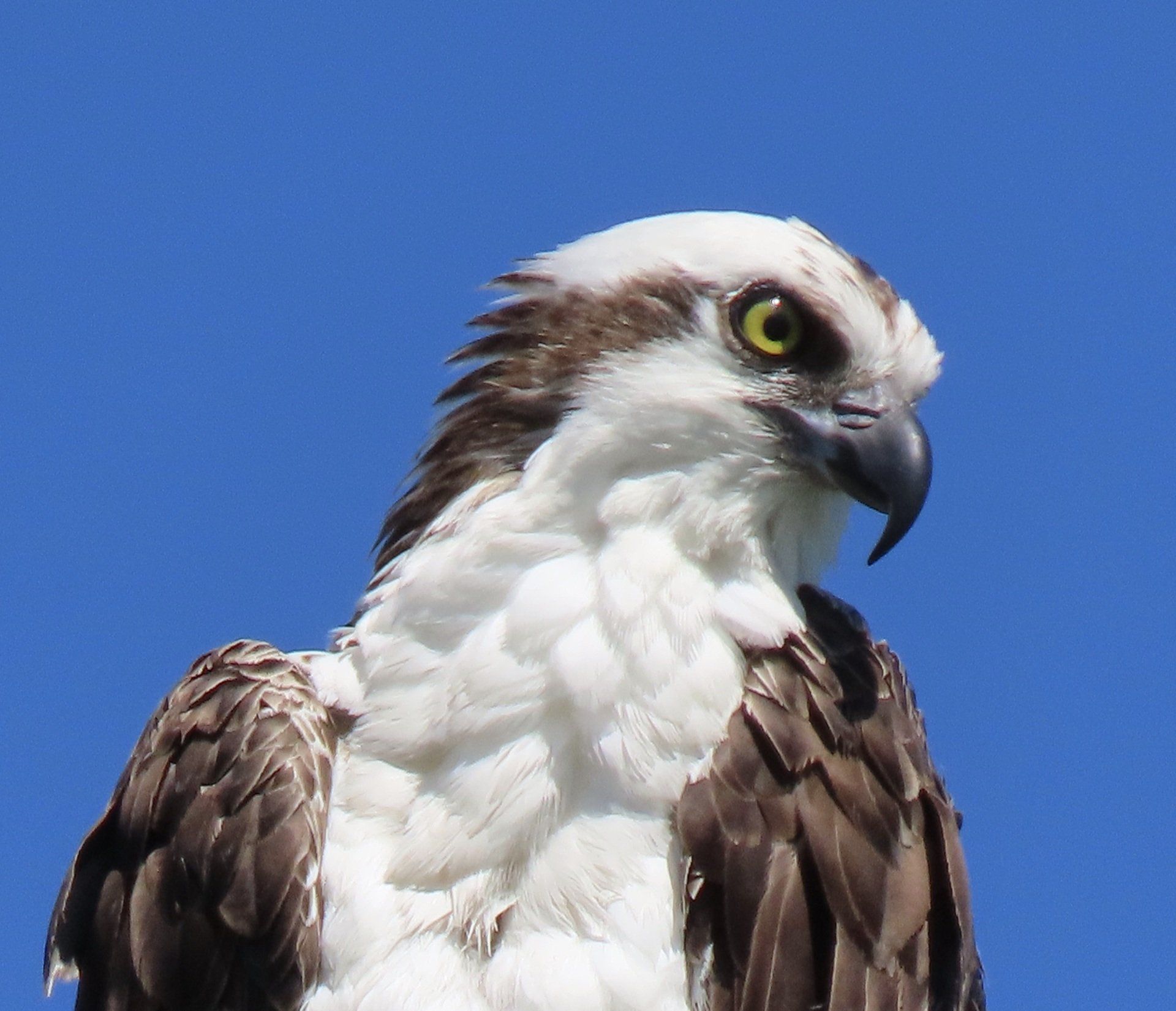
Since SCCF began monitoring ospreys (Pandion haliaetus) in January 2026, the nesting season is in full swing, with numerous nests incubating and even the first chicks confirmed. The photo above, provided by volunteer Penny Albright, is the first confirmed chick! With the help of 40 volunteers, SCCF took over The International Osprey Foundation’s mission and is now monitoring nests on Sanibel, Captiva, Fort Myers Beach, and Pine Island. “Volunteers will continue to monitor nests until the latest chicks fledge in July,” said SCCF Osprey Monitoring Coordinator Amanda Manrique. Both resident and migratory ospreys begin nesting in Florida as early as December, with migratory birds arriving from as far south as Argentina. Ospreys are raptors — predatory birds with sharp talons and a sharp, curved beak. “Though they are sometimes nicknamed the ‘fish hawk’ or ‘sea hawk,’ they actually belong in their own unique family, Pandionidae, of which they are the only species,” adds Manrique. “Their range is amazing — it reaches every continent besides Antarctica.” Ospreys are especially prevalent near shallow waters, as they are heavily dependent on fish for their diet. They are opportunistic nesters and have been known to build nests on trees, chimneys, utility poles, signs, and man-made platforms. “They prefer to nest in open areas to protect their nests from ground predators, often making the nests highly visible to humans, which is great for monitoring the population,” said Manrique. Volunteers have been trained and all slots are filled for this season, with plans to open up again for next year’s nesting season.  Please watch or photograph osprey nests from a distance and report threats to sccfospreys@gmail.com. Learn more at sccf.org/osprey-monitoring
July 15, 2026
Since SCCF began monitoring ospreys (Pandion haliaetus) in January 2026, the nesting season is in full swing, with numerous nests incubating and even the first chicks confirmed. The photo above, provided by volunteer Penny Albright, is the first confirmed chick! With the help of 40 volunteers, SCCF took over The International Osprey Foundation’s mission and is now monitoring nests on Sanibel, Captiva, Fort Myers Beach, and Pine Island. “Volunteers will continue to monitor nests until the latest chicks fledge in July,” said SCCF Osprey Monitoring Coordinator Amanda Manrique. Both resident and migratory ospreys begin nesting in Florida as early as December, with migratory birds arriving from as far south as Argentina. Ospreys are raptors — predatory birds with sharp talons and a sharp, curved beak. “Though they are sometimes nicknamed the ‘fish hawk’ or ‘sea hawk,’ they actually belong in their own unique family, Pandionidae, of which they are the only species,” adds Manrique. “Their range is amazing — it reaches every continent besides Antarctica.” Ospreys are especially prevalent near shallow waters, as they are heavily dependent on fish for their diet. They are opportunistic nesters and have been known to build nests on trees, chimneys, utility poles, signs, and man-made platforms. “They prefer to nest in open areas to protect their nests from ground predators, often making the nests highly visible to humans, which is great for monitoring the population,” said Manrique. Volunteers have been trained and all slots are filled for this season, with plans to open up again for next year’s nesting season.  Please watch or photograph osprey nests from a distance and report threats to sccfospreys@gmail.com. Learn more at sccf.org/osprey-monitoring
View All Articles

Our Mission

The International Osprey Foundation (TIOF) was founded on Sanibel Island, Florida, USA, in 1981. Its founding principle is the protection and preservation of Ospreys worldwide. To that end, TIOF strives to educate the world community and offer research grants on raptor-related projects internationally. TIOF also recruits and coordinates teams of volunteers who build and maintain osprey nesting platforms and monitor osprey nests locally during breeding season. The information gathered provides research data to Osprey Watch, a central database for Osprey research. TIOF is committed to working with like-minded individuals, agencies, and groups to achieve its goals. The mission of TIOF is now part of the Sanibel-Captiva Conservation Foundation (SCCF).

All About Us

Monitoring & Data

In coordination with the transition from TIOF, SCCF staff and volunteer nest monitors collect data about the ospreys each nesting season and post it on Osprey Watch, an international database.

Nest Monitoring

By the Numbers

Since 1981, TIOF and SCCF efforts have led to the successful fledging of nearly 4,000 chicks. Learn about other ways that we track our success.

By the Numbers

Research Grants

From 1990 to 2025, TIOF awarded $120,000 in research grants. While that program is no longer offering grants following the transition to SCCF, its impact lives on through the incredibly diverse research portfolio TIOF supported on behalf of raptors worldwide.

Research Grants

Community Outreach & Volunteer Opportunities

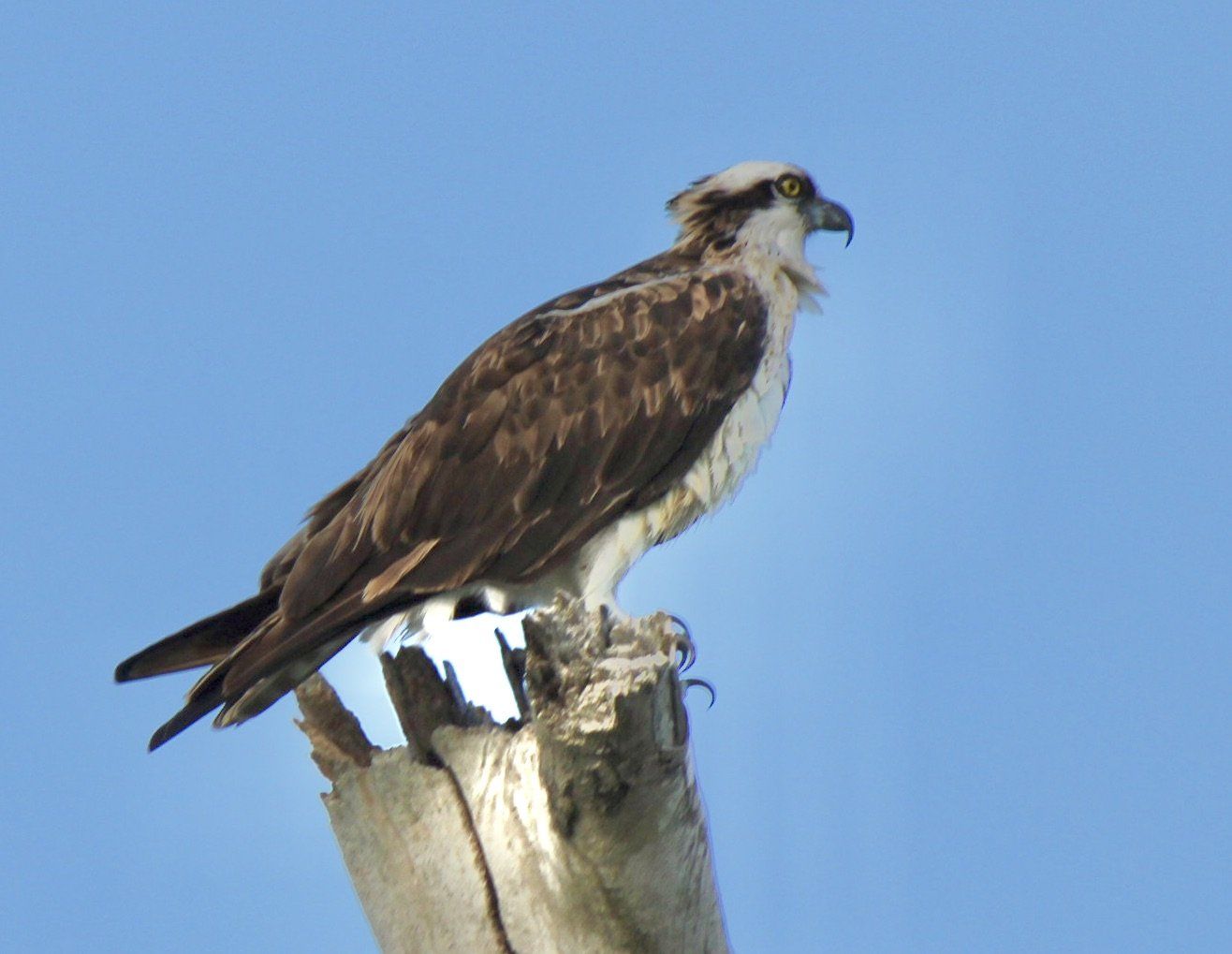
Trained volunteers monitor nests during the osprey nesting season, which occurs from December through late spring to early summer.
Volunteer Opportunities